Sod Farm in Deadwood, SD
Growing Better Lawns, One Project at a Time
Deadwood is one of our farther deliveries; figure somewhere around 35-40 miles from the farm in Vale, closer to 45-50 minutes depending on the route (confirm current time on Google Maps, since routes through the Hills vary more than flatland driving). We still deliver here regularly; it just gets scheduled a little further out than our closer towns.
Deadwood and Lead present a different problem than most of the towns we serve: terrain. A lot of lots here are graded into a hillside, which means slope and erosion control are bigger concerns than they are on a flat Rapid City subdivision lot. This is exactly the situation where sod earns its keep over seed. On a grade, seed and loose topsoil wash downhill in the first hard rain before grass ever germinates. Sod holds the slope from the moment it’s laid and on steeper sections, staking the rolls in place (sod staples) keeps everything anchored while roots take hold over those first two to three weeks.
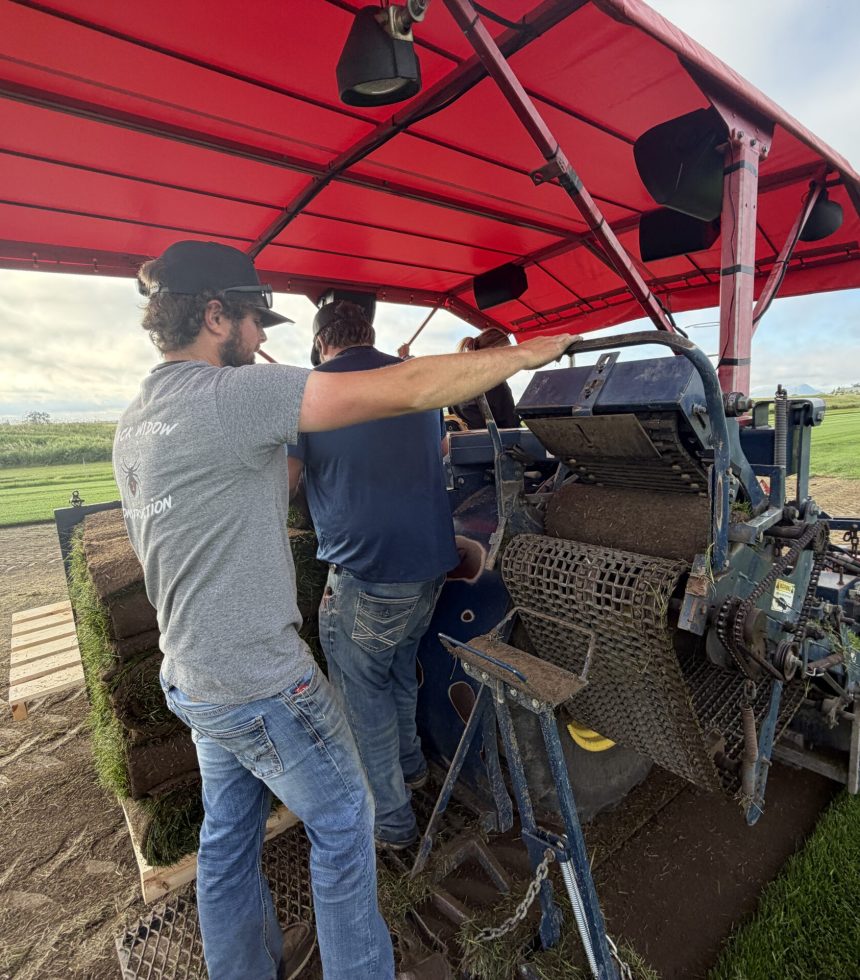
Deadwood’s also a town where a lot of properties are commercial hotels, gaming properties, event spaces, where “the lawn needs to look finished now” isn’t an exaggeration. Seed takes weeks to fill in and look presentable; sod looks like a finished lawn the day it’s installed, which matters when you’ve got guests walking past it that weekend.
Elevation here runs a bit higher and cooler than Sturgis or Belle Fourche, which shifts the growing season slightly; expect first cutting and installation windows to lag a couple of weeks behind the lower-elevation towns we serve most years.
Our 4-way Diversity Kentucky bluegrass blend, with Thermal Blue Texas bluegrass worked in for drought and heat tolerance, still performs well here; the Thermal Blue matters less for Deadwood’s cooler summers than it does in Rapid City or Belle Fourche, but the blend’s durability and self-repair still make it the right call for high-traffic commercial and hillside residential lots alike.
Delivery: Forklift placement wherever access allows. Deadwood’s tight lots and grades are worth a heads-up call before delivery day so we can plan the approach.
Pickup: Possible, but given the drive and Deadwood’s hillside terrain, most customers here opt for delivery rather than hauling pallets themselves.
Delivery & Pickup
Flexible Delivery and Convenient Pickup
Sod Delivery
We don't simply leave your sod at the curb. Our forklift allows us to place pallets wherever safely accessible.
Customer Pickup
Have your own truck or trailer? We'll safely load your fresh sod so you can transport it home while it's at peak freshness.
Frequently asked questions
Does Dakota Sod Farm deliver to Deadwood and Lead, SD?
Yes, it’s one of our farther routes at roughly 35-40 miles from the farm, but we deliver there on a regular basis.
Is sod better than seed for a sloped yard in Deadwood?
Generally yes. Seed and bare topsoil are vulnerable to washing out on a grade before germination happens. Sod’s root mat holds the slope immediately, and staking the rolls on steeper sections keeps everything in place while the roots establish.
Does Deadwood's elevation affect when sod can be installed?
It can push the installation window a couple of weeks later than lower-elevation towns we serve, since the ground and grass on the field respond to the same cooler, higher-elevation conditions. Call ahead for current field status before planning an install date.
How do I keep sod from sliding on a steep Deadwood lot?
Sod staples (or wood stakes on steeper sections) hold the rolls in place until roots take hold, usually within two to three weeks. Lay rolls perpendicular to the slope rather than running them straight up and down, and stagger the seams brick-style; both help keep water and gravity from finding a straight line to work a section loose.
How long is the growing season for new sod at Deadwood's elevation?
It runs shorter than lower towns like Belle Fourche or Sturgis; expect the field’s cutting window to open later in spring and close earlier in fall. That’s less about the sod itself and more about when the ground here is actually workable, so it’s worth calling ahead in early spring or late fall rather than assuming the same timeline as our other delivery areas.